Search the SPREP Catalogue

Refine Search Results

Tags / Keywords

Available Online

Tags / Keywords

Available Online

787 result(s) found.

Sort by

You searched for

  • Tags / Keywords invasive species
    X
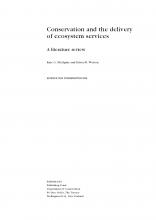
Conservation and the delivery of ecosystem services : a literature review
Biodiversity Conservation, BRB
Available Online

McAlphine Kate G

,

Wotton Debra M

2009
Ecosystem services are the benefits people obtain from ecosystems, such as clean air, fresh water, and the pollination of crops. The aim of this literature review was to find empirical data illustrating the ways in which conservation land and conservation management activities affect ecosystem services. The widely-held belief that natural ecosystems—such as those found on conservation land in New Zealand—provide a range of ecosystem services is generally supported by the literature. International studies show that natural vegetation can decrease air pollution, regulate local air temperatures, improve water quality, reduce shallow soil erosion, and retain natural nutrient cycles. It can also be beneficial for pest control and pollination on agricultural land. Wetlands can improve water quality and can play a role in drought and flood mitigation. Seagrasses, saltmarsh vegetation, and mangroves can reduce the height and force of waves and play a role in flood protection. In addition, maintaining biodiversity preserves genetic libraries and future options for discoveries of valuable biological compounds. The few studies investigating the effects of conservation management activities on ecosystem services indicate that restoring vegetation can improve water quality and water storage functions, can reverse soil degradation on a local scale, and can restore plant-insect interactions. Additionally, removing some invasive plant species can increase water yield. Unfortunately, very few studies of ecosystem services have been conducted in New Zealand to date, and only some of the international results are likely to be applicable under New Zealand conditions. Accordingly, while conservation is probably beneficial for a range of ecosystem services in New Zealand, the scarcity of local data makes it difficult to ascertain where and when, and to what extent, the majority of those benefits transpire. Keywords: ecosystem services, air, climate, water, soil, pest control, disease regulation, pollination, natural hazard protection, nutrient cycling, fish stocks, biodiversity, conservation management, natural habitat, restoration.
Improving the breeding success of a colonial seabird: a cost-benefit comparison of the eradication and control of its rat predator
BRB
Available Online

Bretagnolle, Vincent.

,

Culioli, Jean-Michel.

,

Lorvelec, Olivier.

,

Pascal, Michel Pascal.

2008
Breeding success of 5 Cory’s shearwater Calonectris diomedea sub-colonies of Lavezzu Island (Lavezzi Archipelago, Corsica) was checked annually for 25 consecutive years from 1979 to 2004. Between 1989 and 1994, 4 ship rat Rattus rattus controls were performed in several subcolonies. In November 2000, rats were eradicated from Lavezzu Island and its 16 peripheral islets (85 ha) using traps then toxic baits. We compare cost (number of person-hours required in the field) and benefit (Cory’s shearwater breeding success) of control and eradication. The average breeding success doubled when rats were controlled or eradicated (0.82) compared to the situation without rat management (0.45). Moreover, the average breeding success after eradication (0.86) was significantly (11%) higher than after rat controls (0.75). Furthermore, the great variation in breeding success recorded among sub-colonies both with and without rat control declined dramatically after eradication, suggesting that rats had a major impact on breeding success. The estimated effort needed to perform eradication and checking of the permanent bait-station system during the year following eradication was 1360 person-hours. In contrast, rat control was estimated to require 240 or 1440 person-hours per year when implemented by trained and untrained staff, respectively. Within 6 yr, eradication cost is lower than control cost performed by untrained staff and confers several ecological advantages on more ecosystem components than Cory’s shearwater alone. Improved eradication tools such as hand or aerial broadcasting of toxic baits instead of the fairly labour-intensive eradication strategy we used would dramatically increase the economic advantage of eradication vs. control. Therefore, when feasible, we recommend eradication rather than control of non-native rat populations. Nevertheless, control remains a useful management tool when eradication is not practicable.
Introduced rats indirectly change marine rocky intertidal communities from algae- to invertebrate-dominated
Biodiversity Conservation, BRB
Available Online

Croll, Donald A.

,

Kurle, Carolyn M.

,

Tershy, Bernie R.

2008
It is widely recognized that trophic interactions structure ecological communities, but their effects are usually only demonstrated on a small scale. As a result, landscape-level documentations of trophic cascades that alter entire communities are scarce. Islands invaded by animals provide natural experiment opportunities both to measure general trophic effects across large spatial scales and to etermine the trophic roles of invasive species within native ecosystems. Studies addressing the trophic interactions of invasive species most often focus on their direct effects. To investigate both the presence of a landscape-level trophic cascade and the direct and indirect effects of an invasive species, we examined the impacts of Norway rats (Rattus norvegicus) introduced to the Aleutian Islands on marine bird densities and marine rocky intertidal community structures through surveys conducted on invaded and rat-free islands throughout the entire 1,900-km archipelago. Densities of birds that forage in the intertidal were higher on islands without rats. Marine intertidal invertebrates were more abundant on islands with rats, whereas fleshy algal cover was reduced. Our results demonstrate that invasive rats directly reduce bird densities through predation and significantly affect invertebrate and marine algal abundance in the rocky intertidal indirectly via a cross-community trophic cascade, unexpectedly changing the intertidal community structure from an algae- to an invertebrate-dominated system.